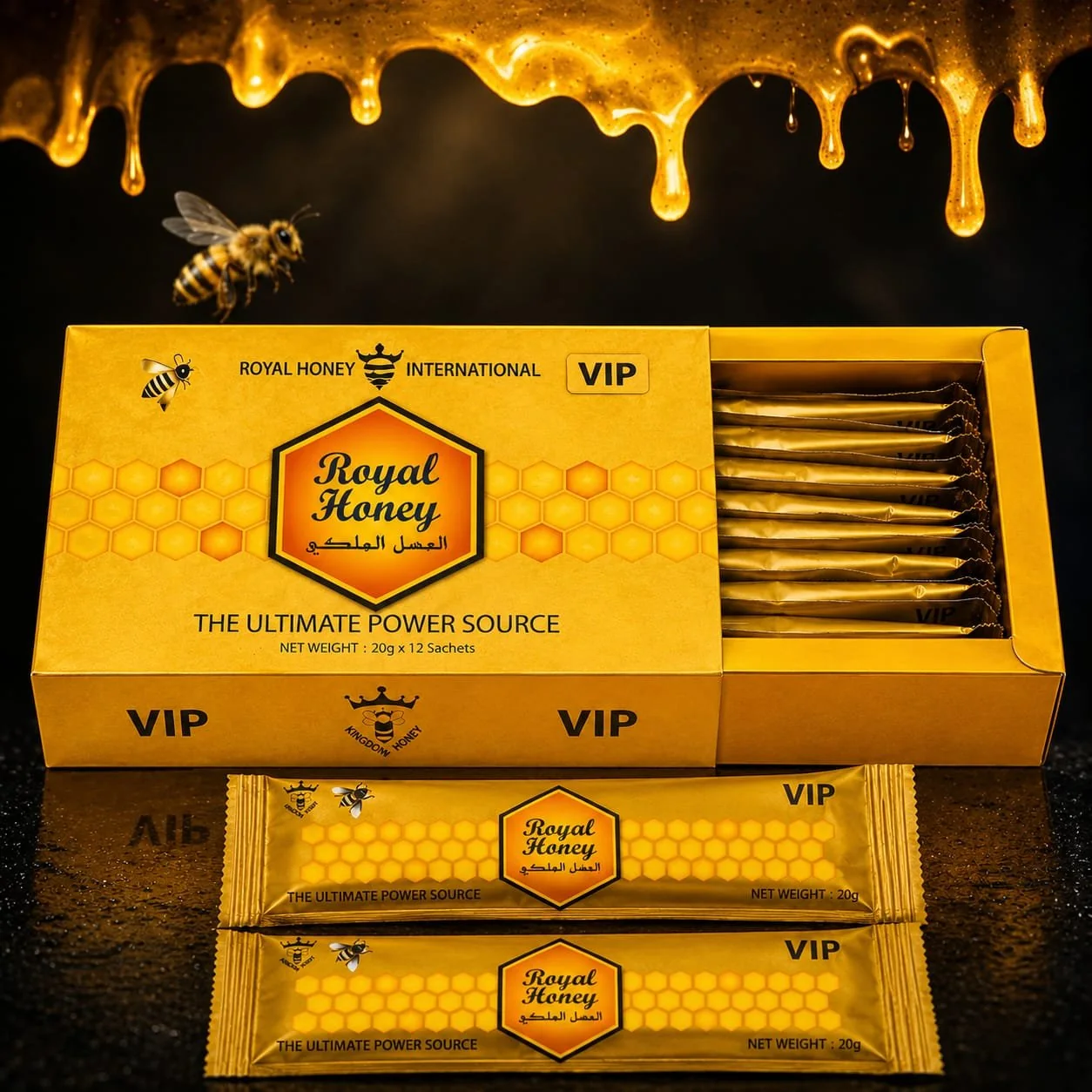
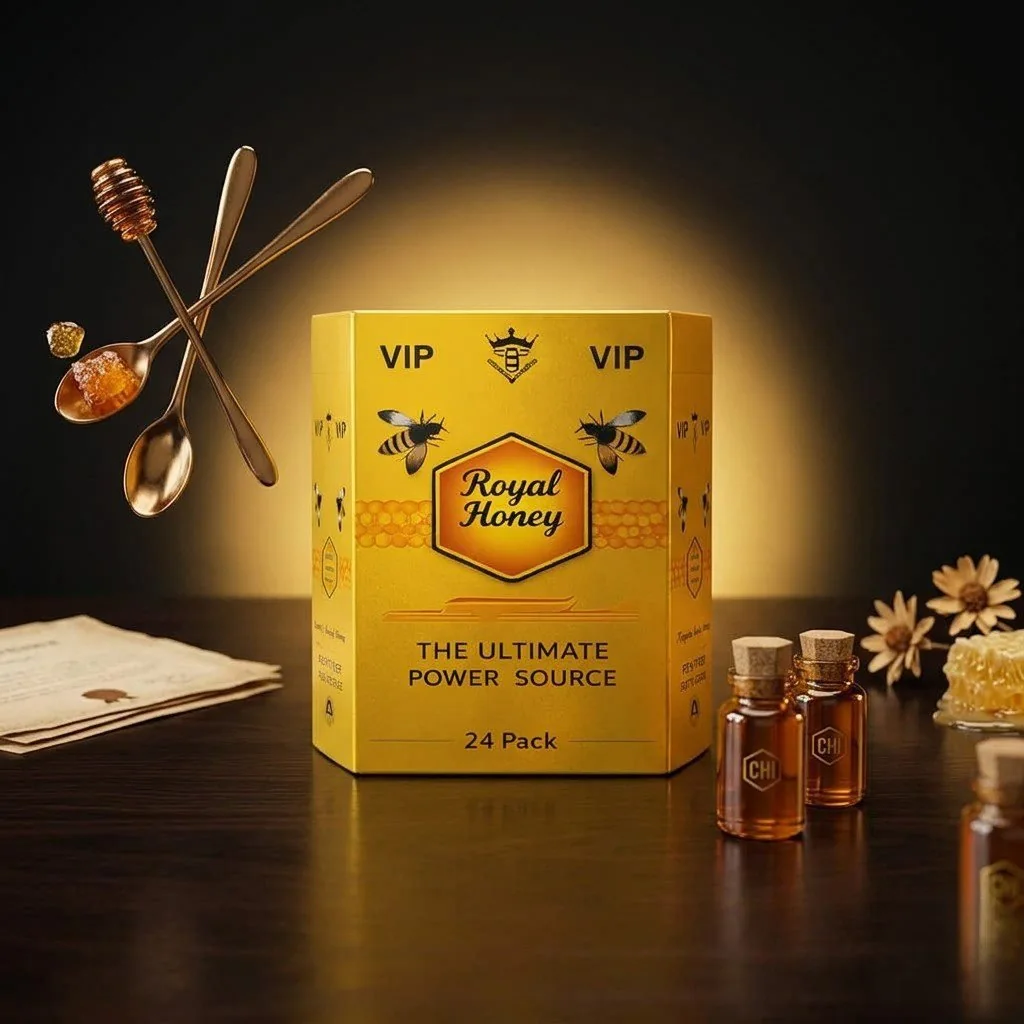
Royal jelly is one of the most fascinating substances in nature. It is the exclusive food of queen bees, and it is the reason why a queen bee lives up to 5 years while regular worker bees live only 6 weeks. Understanding how royal jelly is made helps explain why it is such a valuable ingredient in Royal Honey VIP.
Many people know royal jelly is prized, but not how it is made or how that affects what you buy. This guide follows it from the hive to the packet.
Why this guide works
It links ingredient education to checkout decisions, so you can assess quality signals before ordering any pack size.
- State route: buy royal honey in New York
- Related read: royal honey basics
Who Makes Royal Jelly: The Nurse Bees
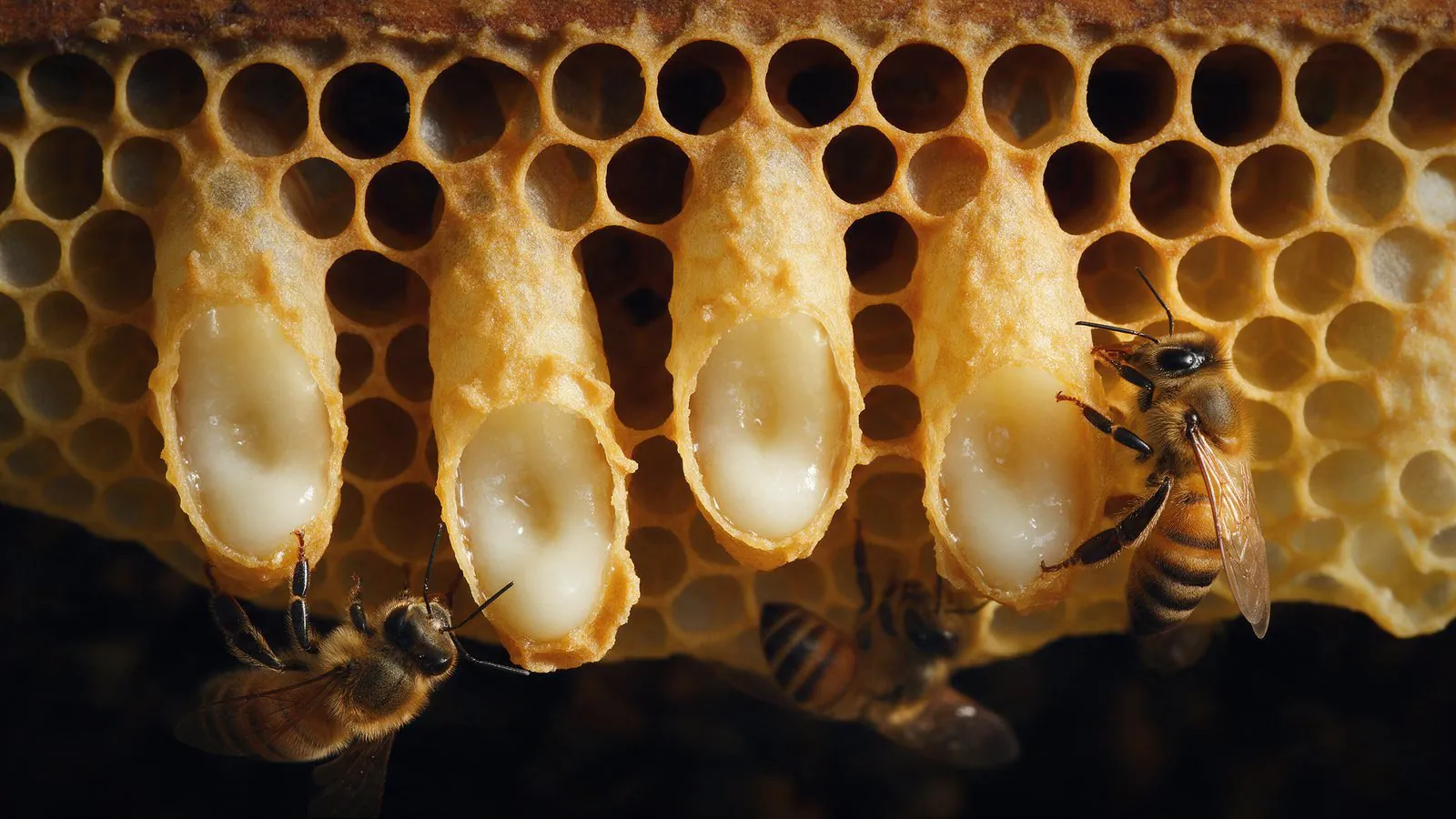
Royal jelly is made by young worker bees, often called nurse bees, in the first weeks of their lives. They produce it in glands in their heads and feed it directly to the larvae in the comb. It is creamy, white to pale yellow, and has a sharp, slightly sour taste.
Why Only the Queen Eats It for Life
For their first few days, all young larvae get some royal jelly. After that, worker larvae switch to a plainer diet, while a larva chosen to become a queen is fed royal jelly the whole time. That difference in diet is why a queen grows larger, lays eggs and lives for years, while summer workers live for weeks.
How Beekeepers Harvest Royal Jelly
- The beekeeper places very young larvae into small artificial queen cups on a frame.
- The frame goes into a strong colony, which treats the cups as future queens and fills them with royal jelly.
- After about three days, when the cups hold the most jelly, the frame is lifted out.
- The larvae are removed and the jelly is collected from each cup by hand or with gentle suction.
- The jelly is filtered and chilled straight away, because it spoils quickly at room temperature.
Each cup gives only a few hundred milligrams, which is why royal jelly takes so much work and costs more than honey.
How Royal Jelly Is Stored and Processed
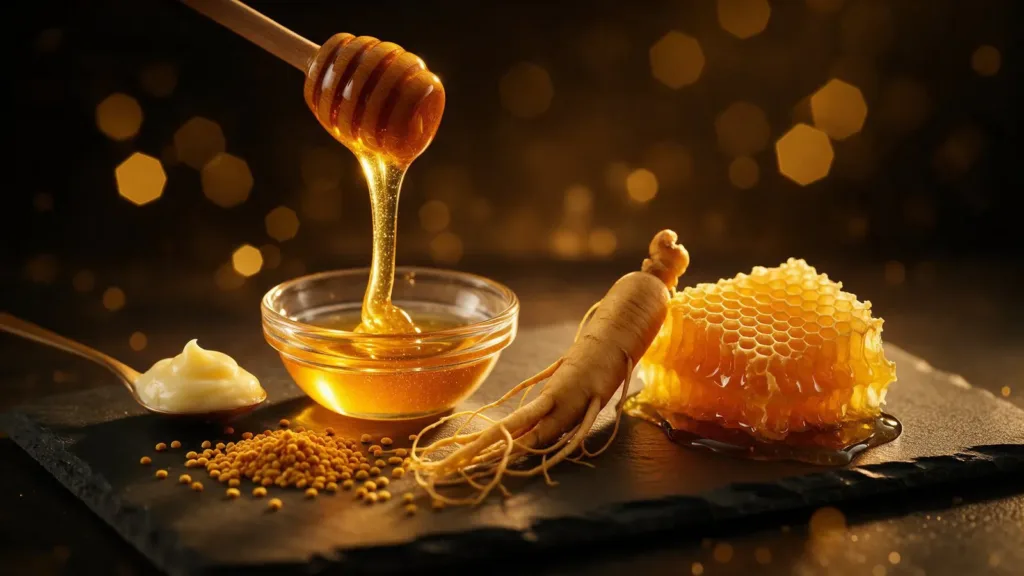
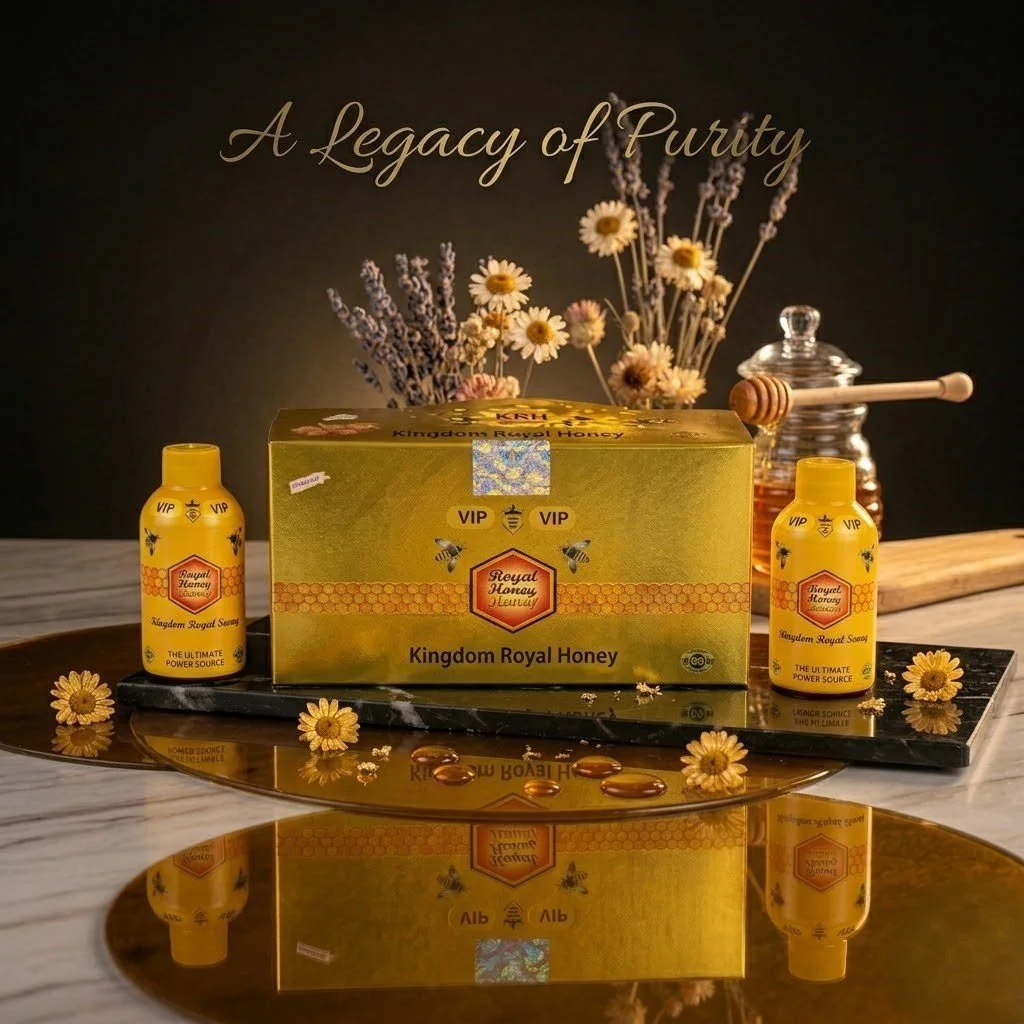
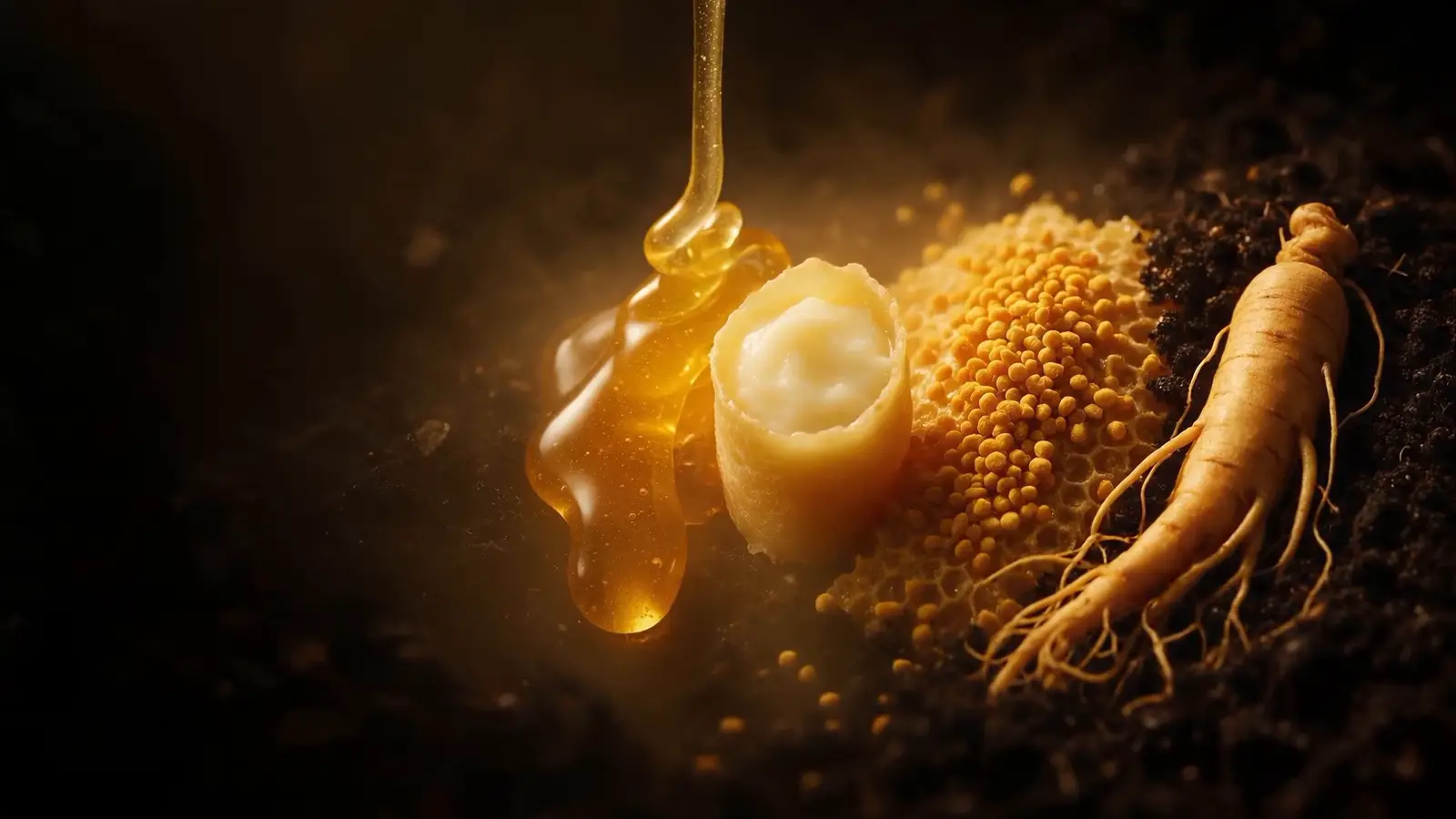
Fresh royal jelly is kept refrigerated or frozen. For longer storage it is often freeze-dried into a powder. In honey blends such as Royal Honey VIP, it is mixed with honey, bee pollen and ginseng and sealed in single-serve packets, and the box shows a best-by date.
What Is in Royal Jelly?
Royal jelly is mostly water, followed by proteins, sugars and fats, with small amounts of B vitamins and minerals. It also contains a fatty acid called 10-HDA that is found almost only in royal jelly. Researchers have studied royal jelly for many uses, but good evidence in people is still limited, so it is best thought of as a food.
Where Royal Jelly Comes From
Most of the world’s royal jelly comes from China, with smaller amounts from beekeepers in other countries. Because it is so perishable, how it was chilled and stored on the way matters as much as where it was made.
Royal Jelly vs Bee Pollen
The two are often confused. Bee pollen is pollen that bees collect from flowers and pack into small pellets. Royal jelly is made by the bees themselves. Royal Honey VIP contains both, blended with honey and ginseng.
Royal Jelly Quality Signs
- Fresh royal jelly is creamy white to pale yellow, with a sour smell, and is sold cold.
- A dark color, a rancid smell or a product left warm for a long time are bad signs.
- In a blend you cannot see the jelly, so rely on a sealed, labeled, dated box from a seller you can contact.
Royal Jelly and Allergies
Royal jelly can cause allergic reactions, and they can be serious in people with asthma or allergies to bees or pollen. If you have ever reacted to a bee product, avoid royal jelly and any honey pack that contains it. More in honey pack side effects.
Inside the Hive: The Royal Jelly Timeline, Day by Day
To see how royal jelly is made in a living colony, follow a single egg. A queen and a worker bee start from the same kind of fertilized egg. What decides their future is how much royal jelly the nurse bees feed them, and for how long:
- Days 1–3: the egg. The queen lays one egg in a wax cell. It hatches into a tiny larva after about three days.
- Larva days 1–3: royal jelly for everyone. Nurse bees keep every new larva lying on a bed of royal jelly. A future worker and a future queen eat the same rich food.
- Larva day 4 onwards: the diets split. Worker larvae move to a plainer food that includes honey and pollen. A larva in a queen cell keeps getting royal jelly, so much that it pools around her.
- About day 8: the cell is sealed. Workers cap the queen cell with wax and the larva becomes a pupa.
- About day 16: a new queen emerges. A worker needs about 21 days from egg to adult.
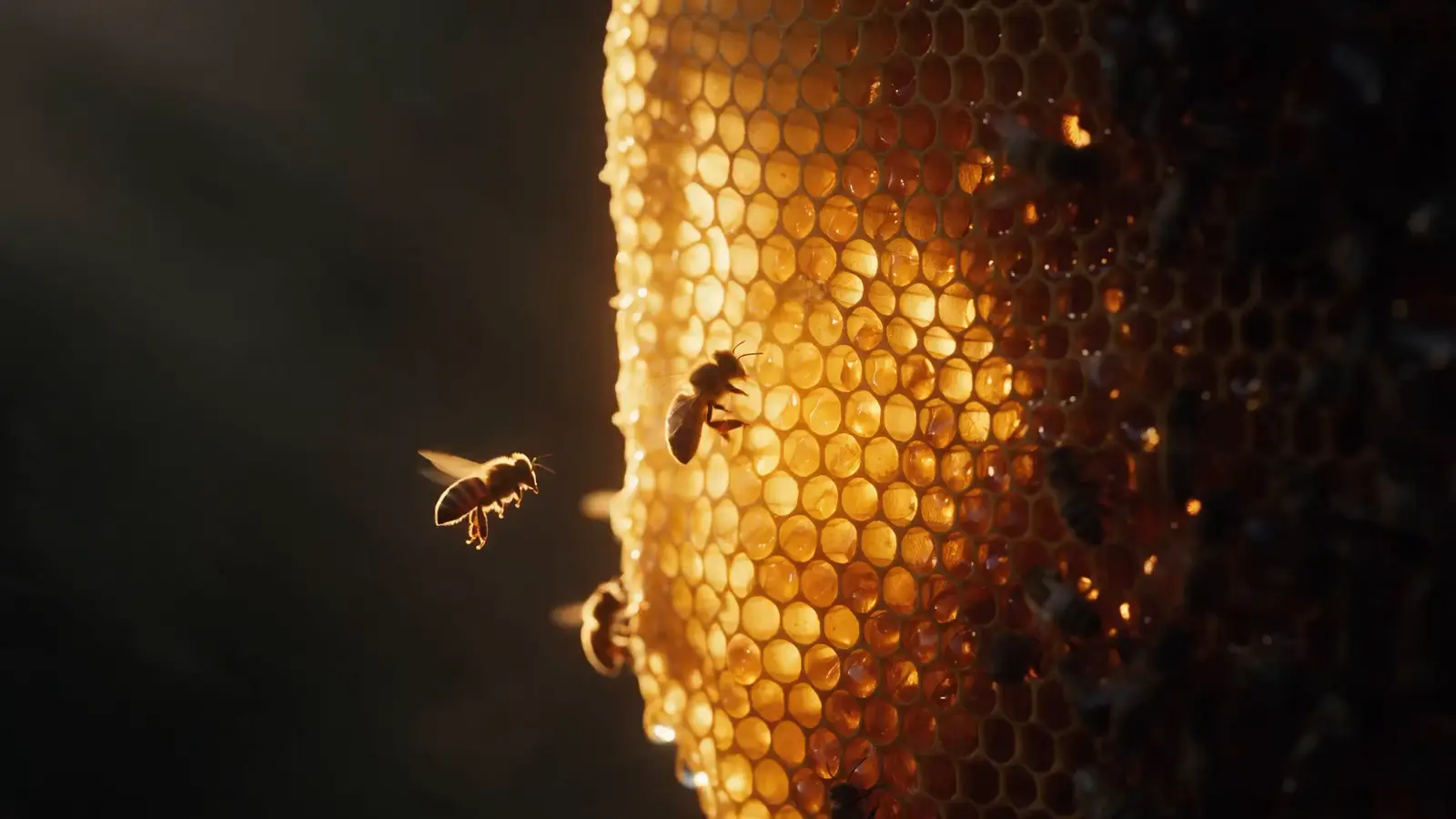
The nurse bees are young workers, roughly in their first two weeks as adults, when the glands in their heads that make royal jelly (the hypopharyngeal glands) are most active. As they age, those glands shrink and the bees move on to building comb, guarding and, last of all, foraging. These timings follow the beekeeping guide from the Food and Agriculture Organization of the United Nations (FAO), which also explains commercial production.
Queen Cups, Grafting and the 72-Hour Harvest Cycle
What is a queen cup?
A queen cup is a small, round starter cell of beeswax or plastic that hangs mouth-down like a natural queen cell. Rows of cups are fixed on bars inside a frame. When the frame goes into a strong colony with young larvae in the cups, the nurse bees treat them as queen cells and fill them with royal jelly.
What is grafting?
Grafting means moving larvae into the cups. With a fine tool, the beekeeper lifts a larva about one day old, barely bigger than a comma on this page, from a worker cell into each cup. Some first add a tiny drop of diluted royal jelly so the larva does not dry out. The work is done quickly and out of direct sun, because larvae this young are fragile.
Why the harvest happens at about 72 hours
About three days after grafting, the cups hold the most royal jelly, because the larva cannot eat it as fast as the nurse bees bring it. Wait longer and the larva eats more, and the bees soon seal the cell. So producers work in a 72-hour cycle:
- Graft day-old larvae into the cups and put the frame into the colony.
- Leave it for about three days while the nurse bees fill the cups.
- Take the frame out, lift out each larva and collect the jelly.
- Graft fresh larvae into the empty cups and return the frame the same day.
Through the warm months this gives a new batch roughly every three days, each one filtered and chilled straight away.
How Much Royal Jelly Does One Hive Make?
Very little, which is why it is scarce. According to the FAO guide, each queen cell should hold at least 200 milligrams, and a well-managed hive can produce about 500 grams, a little over one pound, in a five-to-six-month season. That is something like 2,000 cups emptied by hand. Left to themselves, bees raising a few queens make no more than a gram or two per hive.
Does Royal Jelly Need to Be Refrigerated?
Fresh royal jelly does. It is mostly water and loses quality quickly when warm, so it is chilled right after harvest. The FAO guide treats 32 to 41°F (0 to 5°C) as the minimum, with freezing for longer storage. Other forms are made so the jelly does not have to stay cold all the way to you:
| Form | How it is stored | Signs it is past its best |
|---|---|---|
| Fresh royal jelly | In the fridge, or the freezer for longer storage | Darker color, rancid smell, or left warm |
| Freeze-dried powder or capsules | Sealed and dry, usually at room temperature, as the label says | Damp or clumped powder, or past the date |
| Blended into honey (such as Royal Honey VIP) | A cool, dry place away from direct sunlight | A torn, swollen or leaking packet, or past the best-by date |
Freeze-dried royal jelly is the same jelly with the water removed, and it is far more stable, which is why capsules use it. Keep Royal Honey VIP in a cool, dry place and use each packet before the best-by date. A honey blend that gets cold may thicken or crystallize, which is natural for honey.
Should You Take Royal Jelly in the Morning or at Night?
There is no proven best time. No good studies compare morning with night, so any claim that one works better is a guess. A few practical points:
- Follow the label for the serving and timing, not a number from a forum.
- Try a new bee product when you are awake and not alone, so you can act quickly if you have an allergic reaction.
- Consider a meal. Fresh royal jelly tastes sharp and can upset some stomachs.
- For honey blends, follow the box and never take more than one Royal Honey VIP packet in 24 hours.
What Happens If You Take Royal Jelly Every Day?
Honestly, nobody can promise what daily royal jelly will do. Cleveland Clinic notes that for most uses people try it for, there is either too little evidence to reach a conclusion or the studies did not show it working. Daily use does not remove the risks either: allergic reactions, upset stomach and interactions with some medicines. The National Center for Complementary and Integrative Health advises following the label, telling your health care providers about every supplement you take, and stopping and calling your provider if you notice side effects (NCCIH: using dietary supplements wisely).
A honey blend is a different case. A Royal Honey VIP packet is a serving of honey first, so one every day adds sugar and calories. It is meant for now and then, never more than one packet in 24 hours.
Who Should Avoid Royal Jelly?
Natural does not mean right for everyone. Skip royal jelly, or speak to a doctor first, if any of these apply:
- Bee or pollen allergies. People with bee-sting, pollen or seasonal allergies, asthma or eczema are more likely to react, and Cleveland Clinic notes reactions can include asthma attacks and anaphylaxis.
- Pregnancy or breastfeeding. NCCIH points out that many supplements have not been studied in pregnant or nursing women. Our honey packs are not for pregnant or breastfeeding women.
- Under 18. Honey packs are adult products.
- Certain medicines. Cleveland Clinic advises against combining royal jelly with blood pressure medicine, diabetes medicine, hormone therapy or the blood thinner warfarin, because it may push blood pressure or blood sugar too low, affect hormone treatment or raise the risk of bleeding.
For warning signs and what to do, see our guide to honey pack side effects and who should skip them.
Does Royal Jelly Give You a Buzz?
No. Royal jelly is not a stimulant, and it contains no caffeine. It is mostly water, with proteins, sugars and fats, and nothing in it works the way coffee, tea or an energy drink does.
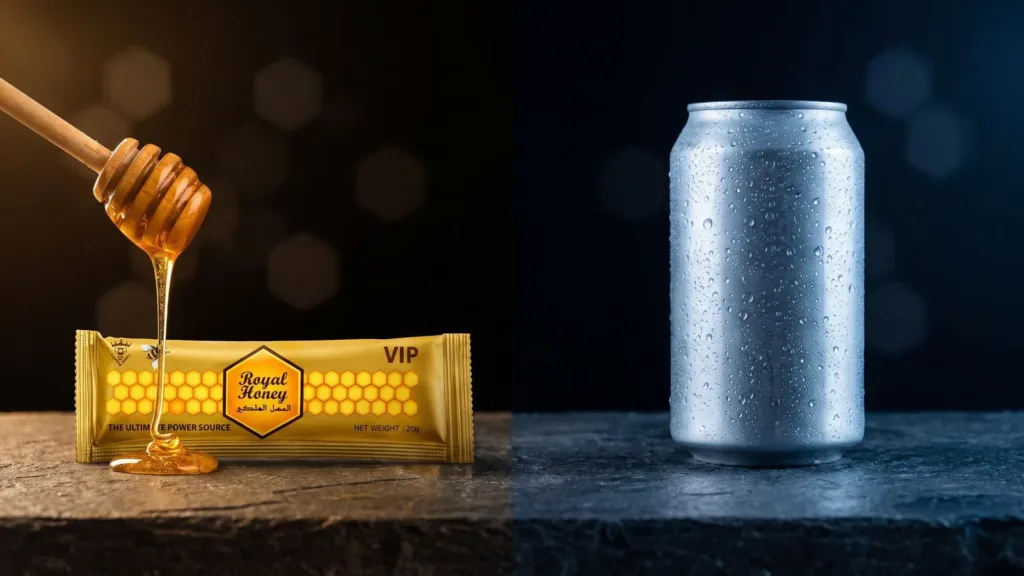
The same goes for honey blends. The honey in a Royal Honey VIP packet adds natural sugars and calories, much like a spoonful of honey in tea, and caffeine is not on its ingredient list. If you want a caffeine-style jolt, a honey pack is not that. See how royal honey compares with energy drinks.
Bee Pollen Questions People Ask
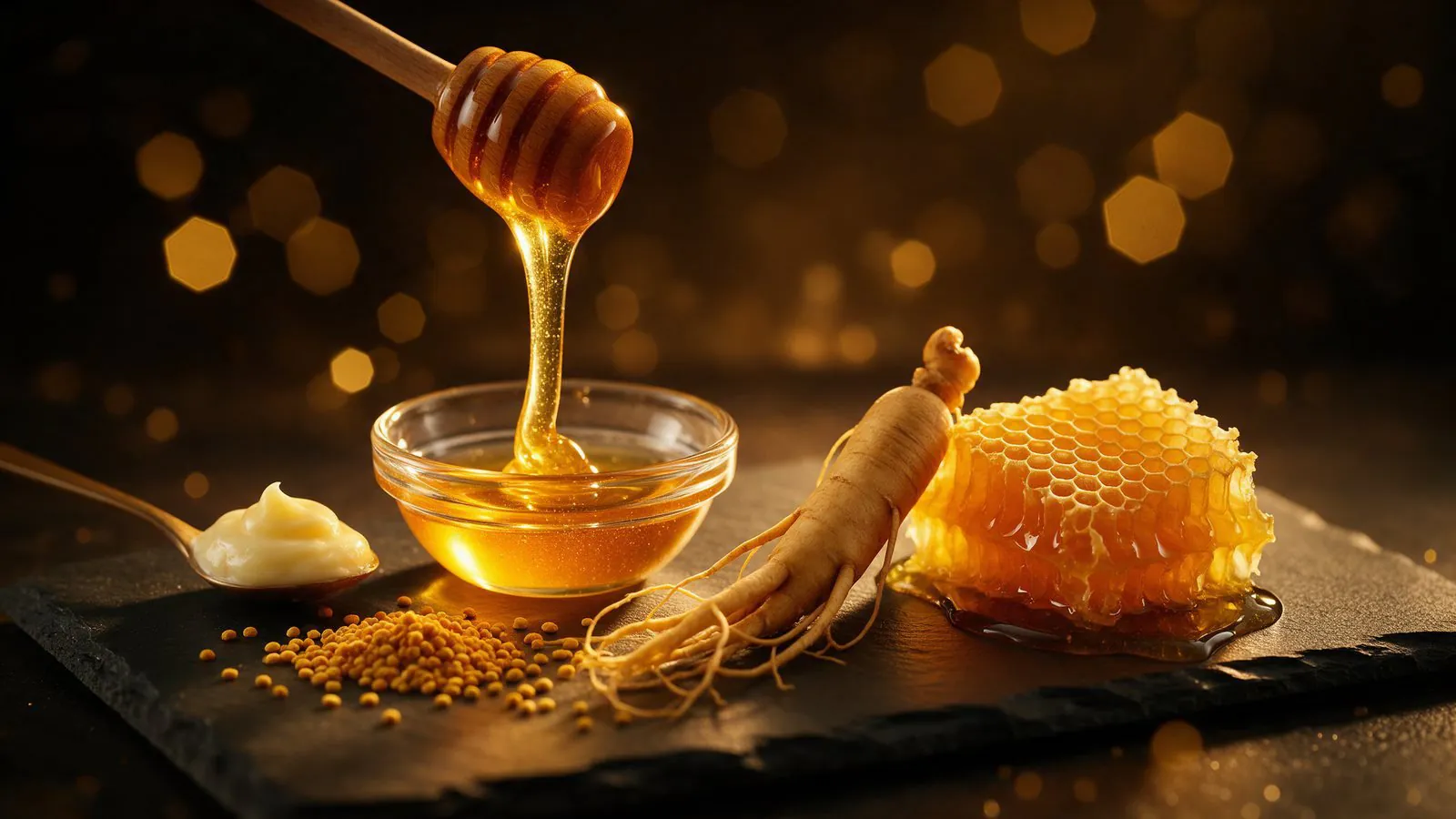
Bee pollen sits next to royal jelly in many honey blends. It is flower pollen that bees pack into small pellets with nectar and their own secretions.
Why do some people feel unwell after bee pollen?
Often the reason is an allergy. Pollen is a major cause of hay fever, and Cleveland Clinic warns that bee pollen is not safe for people with bee allergies and can cause reactions in people with pollen allergies: hives, light-headedness, trouble breathing, or swelling of the face, lips, tongue or throat. Severe reactions have been reported in people with seasonal allergies who started taking it. Trouble breathing or a swelling throat is an emergency: call 911.
What happens if you take bee pollen every day?
There is no good evidence that daily bee pollen does anything special. The Cleveland Clinic expert knows of no persuasive studies showing it works for any condition, and its vitamins, minerals and antioxidants are also found in ordinary foods. Daily use also means daily pollen, a poor fit for anyone with seasonal allergies.
What should you not take with bee pollen?
Bee pollen has been studied far less than medicines, so there is no complete list of what it can interact with. Ask your doctor or pharmacist first if you take a blood thinner such as warfarin, diabetes or blood pressure medicine, or hormone therapy, the medicines Cleveland Clinic flags with royal jelly, which often comes in the same blend. And do not stack bee products, such as a honey pack plus pollen granules and royal jelly capsules on the same day.
Royal Jelly in Royal Honey VIP
In Royal Honey VIP, royal jelly is one of four ingredients, blended into honey with bee pollen and ginseng and sealed in single-serve packets. It is a food, not a treatment for any condition, and the allergy rules above apply to it in full. Check the ingredient list, serving and best-by date on the box before you start.
To see how royal honey differs from royal jelly itself, read what royal honey is. For a closer look at each ingredient, see what is inside a Royal Honey VIP packet.
FAQ
Is royal jelly the same as honey?
No. Honey is made from flower nectar and stored by bees as food. Royal jelly is made in the bees’ glands to feed larvae and the queen.
Are bees harmed when royal jelly is collected?
Adult bees are not harmed. In commercial harvesting, the young larvae in the artificial queen cups are removed before the jelly is collected.
How long does royal jelly last?
Fresh royal jelly keeps for a short time in the fridge and longer frozen. In a sealed honey blend, use it before the best-by date on the box.
Why is royal jelly expensive?
Each queen cup yields only a few hundred milligrams, the work is done by hand, and the jelly must be kept cold from the hive onwards.
How many days does it take to harvest royal jelly?
About three. Day-old larvae are grafted into queen cups and left in the colony for roughly 72 hours while nurse bees fill the cups, then the jelly is collected.
Is royal jelly vegan?
No. It is made by bees and collected from the hive, so it is an animal product, like honey.
What does royal jelly taste like?
Fresh royal jelly is tangy and sour, with a slightly bitter edge. Mixed into honey, the honey’s sweetness is what you notice most.
Can you take royal jelly and bee pollen together?
Many products, including honey blends, already combine them. The same cautions apply to both: skip them with bee or pollen allergies, during pregnancy or breastfeeding, or with medicine your doctor has not cleared.
Related reading: what is inside Royal Honey VIP, what a honey pack is and honey pack side effects and allergies.
Quick Answers
What is the best way to start with Royal Honey VIP?
Start with a simple routine and match the format to your consistency goals. Beginners typically test first, then scale to larger packs for long-term value.
How should buyers choose the right format?
Choose by behavior: trial users use a single format, routine users use mid-size packs, and repeat users usually prefer value-focused larger bundles.
When should someone upgrade from starter options?
Upgrade when usage is stable for multiple weeks and reorder frequency increases. This usually improves convenience and value per serving.
Which option fits long-term consistency best?
Long-term users generally select larger bundles because they reduce reorders and support a predictable weekly routine.